
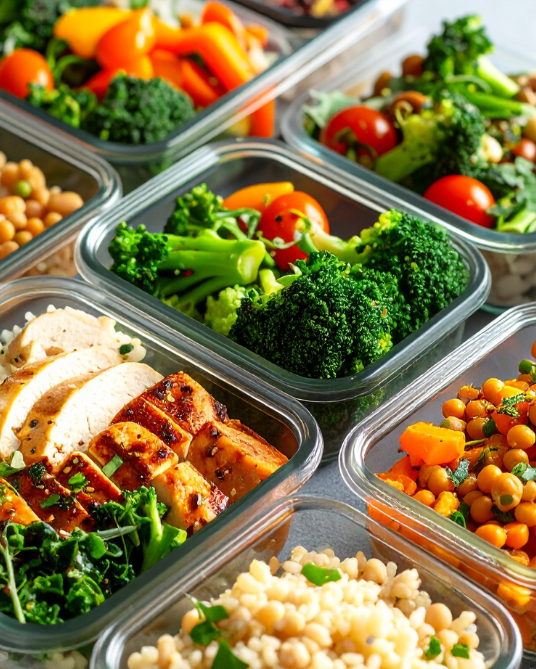
Meal prepping can feel intimidating before you even begin.
The color-coded containers, the strict schedules, the “I cook for six hours every Sunday” TikToks—it all makes it seem like you need a system, a label maker, and a personality overhaul just to feed yourself properly.
But meal prepping isn’t meant to be another form of discipline or something you have to get “right.”
This guide is for real life. Not Pinterest perfection. Not aesthetic fridges stocked like a magazine shoot.
What Meal Prepping Actually Means
For some people, that looks like prepping ingredients: washing and chopping vegetables, roasting a tray of protein, or cooking a pot of grains so they’re ready when you are. Others prefer prepping components—think mix-and-match bases like roasted veggies, sauces, and proteins that can turn into different meals throughout the week. And yes, prepping full meals is an option too—but only if it genuinely supports you and your schedule.

Start With One Question: What Do You Struggle With Most During the Week?
Maybe you have no energy to cook after work. Maybe the hardest part is deciding what to eat, not making the food itself. Or maybe meals get skipped altogether and takeout becomes the default. These are the moments meal prepping is meant to support.
The Simplest Way to Start Meal Prepping (Your First Week)
Begin by choosing just two to three meals, total. Not per day. Not for the whole week. Just a small handful that will carry you through your busiest moments. Repeating ingredients across those meals can make grocery shopping and prep feel far less overwhelming, and it saves time in the kitchen too.

Grocery Shopping Without Overthinking It
Try building your list around a simple framework: one protein, one carb, two vegetables, and one comfort or fun item. This keeps things balanced without requiring a long checklist or complicated planning. Repeating these ingredients across a few meals helps everything get used—and keeps prep straightforward.
How Much Time Meal Prepping Really Takes
For most beginners, a 30–90 minute window is more than enough—especially when you’re prepping simple meals or components. That time can feel lighter when you pair it with something enjoyable: a favorite playlist, a podcast you’ve been saving, or even lighting a candle to shift the mood.
Containers, Storage & Keeping It Low-Effort
What actually matters is visibility and simplicity. Clear containers help you see what you’ve prepped, a fridge that keeps meals front and center makes them easier to reach for, and easy reheating removes friction on busy days. If it feels complicated, it’s less likely to get used.

Final Thoughts
Meal prepping isn’t meant to be something you perfect or turn into a personality. It’s a practice—one that shifts with your schedule, your energy, and the season of life you’re in. What works now might look different later, and that’s not only okay, it’s expected.
Starting small is more than enough. One meal, one habit, one adjustment at a time. Each week gives you new information, and you’re allowed to change your approach as you go.
If there’s one thing to take away, let it be this: feeding yourself consistently is already a win. This week, try one small prep and simply notice how it feels. That awareness is where everything begins.
